
Weight Loss
Why Belly Fat Increases After 40 (And How to Lose It Naturally Without Extreme Dieting)
Written by Dr. James Krystosik · Published April 4, 2026 · Updated September 23, 2026
Functional Medicine Physician, Chiropractor, Author, Podcast Host · In practice since 1986
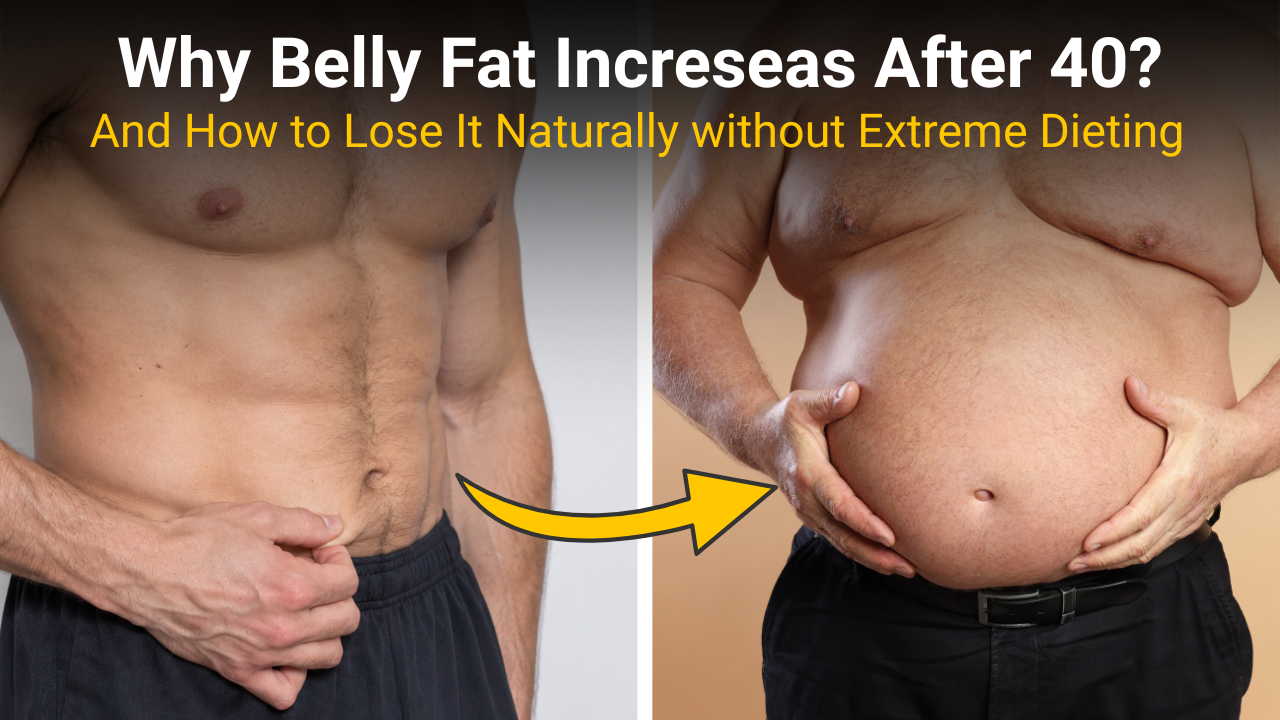
Dr. J’s quick answer: Abdominal fat often increases after 40 because several factors can converge: less muscle, lower activity, sleep disruption, menopause or other hormonal changes, stress, medications, and energy intake. The solution should address the person, not punish them with an extreme diet.
If you’re over 40 and noticing your waistline slowly expanding—even though you’re not eating more—I want you to understand something right away. This is one of the most common concerns I hear from patients, and it’s often misunderstood. Most people assume it’s just aging, but from my clinical experience, that’s only a small part of the story.
What’s really happening is a shift inside the body. After 40, your metabolism, hormones, digestion, and muscle mass begin to change in subtle ways. These changes don’t show up overnight, but over time, they create the perfect environment for belly fat to accumulate.
It Starts With a Slowing Metabolism
One of the first changes that occurs after 40 is a gradual slowing of the metabolic rate. You don’t notice it immediately, but your body is burning fewer calories than it did in your 20s and 30s. Even if your eating habits stay the same, your body is no longer processing energy the same way.
Research published in The American Journal of Clinical Nutrition shows that resting metabolic rate declines with age, primarily due to loss of lean muscle mass. This means your body becomes more efficient at storing energy rather than burning it, and that energy often ends up as fat around the belly.
Muscle Loss Changes Everything
Now here’s something I emphasize with my patients all the time—muscle is your metabolic engine, your fat burning engine. After 40, if you’re not actively maintaining muscle, you begin to lose it gradually. This process is known as sarcopenia, and it causes you to tack on unwanted pounds.
Studies in The Journal of Gerontology demonstrate that adults can lose up to 3–8% of muscle mass per decade after 30, with acceleration after 40. As muscle declines, metabolism slows further, and the body shifts toward fat storage. This is why people often say, “I’m doing the same things, but gaining weight.”
Hormonal Shifts Drive Fat to the Belly
After 40, hormonal changes begin to influence where fat is stored. In men, testosterone levels gradually decline. In women, estrogen begins to fluctuate and eventually decrease. These hormones play a major role in fat distribution.
Research from The Journal of Clinical Endocrinology & Metabolism shows that lower testosterone and estrogen levels are associated with increased visceral fat—the type of fat that accumulates around the organs in the abdominal area. This is why weight gain after 40 often shows up specifically in the belly, not evenly across the body.
Blood Sugar Becomes Less Stable
Another major shift I see in patients over 40 is blood sugar problems. Your body becomes less sensitive to insulin, which means it has a harder time managing your blood sugar efficiently. When blood sugar rises and falls rapidly, the body compensates by storing more fat. And incidentally, that’s exactly what happens when you eat refined carbs, or low carb foods that lack fiber.
Studies published in Diabetes Care confirm that insulin resistance increases with age, even in individuals who are not diabetic. This leads to higher fat storage, particularly around the belly. This is also why cravings for carbohydrates and sugar tend to increase during this stage of life.
The Gut Is Quietly Controlling Fat Storage
This is where most people are completely in the dark.
Your gut microbiome, the bacteria in your gut plays a powerful role in how your body processes food and stores fat. After 40, the diversity of beneficial bacteria declines due to years of antibiotics, processed foods, stress, and environmental toxins.
Research in Nature Reviews Gastroenterology & Hepatology shows that beneficial gut bacteria can affect how many calories are extracted from food and regulate fat storage signals. In other words, two people can eat the same meal, but their bodies may store it differently depending on their gut health.
In my practice, when we improve gut balance, we routinely see improvements in weight—even without radical dietary changes, like eating a low carb diet.
Chronic Inflammation Changes the Internal Environment
After 40, inflammation tends to rise gradually. This is not the kind of inflammation you feel immediately—it’s low-grade, chronic inflammation silently happening inside your body’s cells. Over time, it affects metabolism, hormone signaling, and fat storage.
Studies in The Lancet Diabetes & Endocrinology have linked chronic inflammation to obesity and metabolic dysfunction. When inflammation is elevated, the body becomes more resistant to fat burning and more prone to fat storage.
And again, most of this inflammation originates in the gut.
Stress and Cortisol Target the Belly
Let me talk about stress for a moment, because this is a major factor that people underestimate.
After 40, the body becomes more sensitive to stress. Chronic stress leads to elevated cortisol levels, and cortisol has a very specific effect—it promotes fat storage around the belly.
Research published in Psychoneuroendocrinology shows a direct relationship between cortisol levels and dangerous visceral fat storage. This is why people often gain belly fat during stressful periods, even when their diet hasn’t changed significantly.
Sleep Disruption Makes It Worse
Sleep also changes after 40. Many people experience disrupted sleep, more frequent awakenings, and less deep restorative sleep. This has a significant impact on metabolism and weight.
Studies in Sleep Medicine Reviews demonstrate that poor sleep triggers imbalances in appetite hormones like leptin and ghrelin, increases cortisol levels and reduces insulin sensitivity. The result is binge eating, reduced fat burning, and increased fat storage.
So even if your diet is pretty good, poor sleep can quietly disrupt your progress.
From My Clinical Experience
After decades in practice, I have learned that belly fat after 40 rarely has one explanation. Sleep, activity, muscle mass, food intake, menopause or other hormonal changes, medication, and medical conditions may all contribute.
The metabolism slows. The gut becomes toxic, sluggish and less efficient in absorbing nutrients. Hormones change. Inflammation increases. Sleep quality declines. Stress builds. Each of these factors contribute to the problem and together they create a powerful shift toward fat storage.
The Solution Is Not Extreme Dieting
One of the biggest mistakes I see is people trying to fix this with extreme dieting. They radically reduce all carbs, including healthy ones or follow short-term programs that don’t address the root cause.
That approach may produce temporary results, but it does not correct the cause or restore balance to the body’s systems. And when the system isn’t fixed, the weight comes back. What works is restoring balance.
Restoring the System That Controls Weight
From my perspective, the focus should always be on supporting, cooperating with the body, not fighting it.
That means improving gut health so nutrients are absorbed properly. Stabilizing blood sugar so the body doesn’t store excess fat. Reducing inflammation through whole-food nutrition. Maintaining muscle through movement and resistance training. Improving sleep and managing stress.
When these systems begin to work together in harmony, the body naturally shifts away from fat storage and toward fat burning.
Conclusion: Why Belly Fat Increases After 40
Belly fat after 40 is not simply about eating too much or exercising too little. It is the result of metabolic, hormonal, digestive, and inflammatory changes that occur gradually over time.
The most important thing I want you to understand is this—your body is not working against you. It is giving back to you responses too the the internal environment you’ve created over the years.
When you improve the internal environment, everything changes. And when you cooperate with the body and provide it the resources it needs, the system works in harmony. Positive results will follow—naturally.
Dr. J’s evidence-based perspective
In my clinical work, I do not sell patients a single-food, single-device, or single-treatment solution. I look at the complete pattern: nutrition, movement, sleep, stress, medications, medical conditions, muscle mass, and what the patient can realistically sustain.
When to seek medical care
Seek individualized medical advice if weight changes are rapid or unexplained, or if you are pregnant, breastfeeding, living with diabetes, taking weight-affecting medication, or have a history of an eating disorder. Chest pain, fainting, or severe weakness needs urgent assessment.