

Plant-based diets are gaining popularity for long term weight management, and consequently, almond milk and coconut milk have become household names. Both are popular alternatives to dairy, often chosen for individuals with milk allergies or their lactose-free nature and versatility in smoothies, coffee, and cooking. But when it comes to a weight-loss goal — which one is truly better: almond milk or coconut milk?
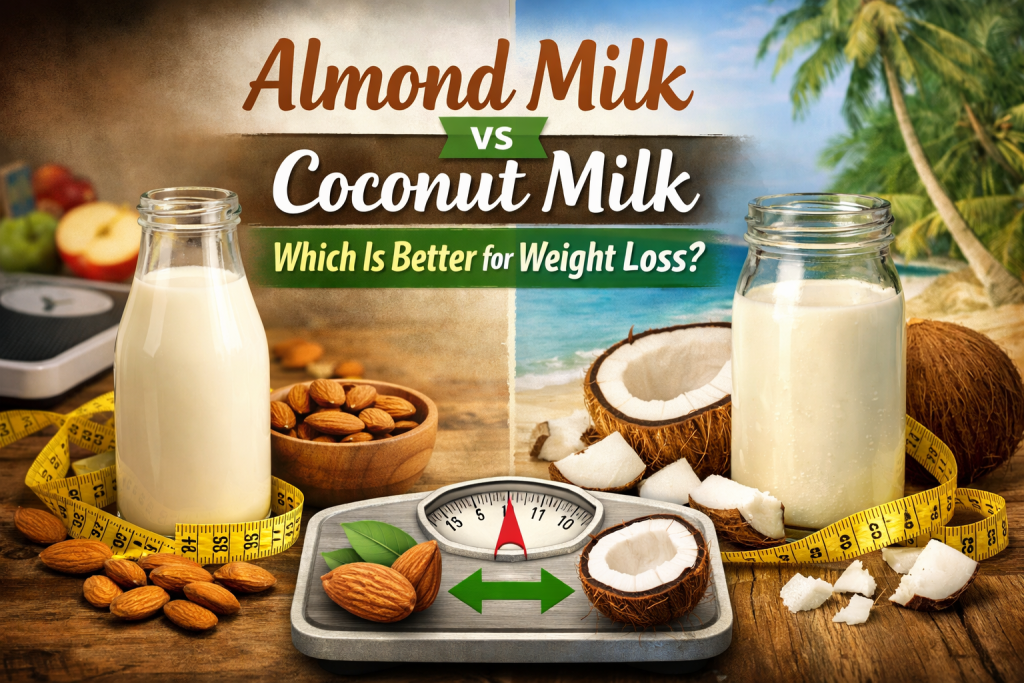
This topic might seem simple, but the answer requires looking at calories, fat content, metabolic effects, and overall nutrition — not just taste or texture. Let’s explore how these two milks compare metabolically and why one may help you stay closer to your weight-loss goals, while the other might serve a different purpose.
Calorie and Fat Differences: The Core Metabolic Story
One of the foundational principles of weight loss is calorie balance. To lose weight, the body must burn more energy than it takes in. That’s why the caloric content of what you drink matters.
Unsweetened almond milk is famously very low in calories, often around 30–50 calories per cup. In contrast, coconut milk tends to be slightly higher — around 45–60 calories per cup in its lighter versions, with full-fat canned types going much higher depending on thickness and preparation.
Even on a gram-for-gram basis, almond milk has significantly fewer calories than coconut milk — which makes a difference when you’re tracking intake carefully.
The fat profile also differs. Almond milk is lower in total fat and has mainly unsaturated fats, which are more heart-friendly. Coconut milk contains saturated fats — especially in richer versions — because of its coconut oil content. However, it should be noted that the saturated fat in coconut milk is primarly medium-chain fatty acids, animal fat is primarly long-chain fatty acids. Populations of people worldwide who rely on coconut milk as a staple are traditionally lean and have low incidence of heart disease. However, saturated fats are more calorie-dense and less directly supportive of calorie control, especially if weight loss is your priority.
Satiety, Metabolism, and Hormonal Impact
Beyond calories, there’s another factor: how a food or drink influences hunger, fullness, and metabolism.
Almond milk’s low calorie count means it doesn’t contribute much energy, but it also means it won’t blunt hunger on its own. If your diet replaces higher-calorie beverages (like sweetened dairy or sugary coffee drinks) with unsweetened almond milk, that simple switch can meaningfully reduce your overall daily intake of calories.
Coconut milk contains more fat — and fat digests slowly. Some people feel more satisfied after eating foods with fat, partly because fat stimulates peptides that signal fullness. Coconut milk also contains medium-chain triglycerides (MCTs), a type of fat that is metabolized differently — the body may use MCTs more quickly for energy rather than storing them as fat when consumed in moderation. However, this metabolic edge is subtle and not a standalone weight-loss mechanism.
In other words, almond milk supports calorie control more directly, while coconut milk may support satiety in a slightly different way — but both depend on the total calorie picture of your diet.
Nutrition Beyond Calories: Vitamins, Minerals, and
Straight almond milk and coconut milk are fundamentally low-nutrient liquids on their own because they’re mostly water. But most commercial versions are fortified with calcium, vitamin D, and sometimes vitamin B12 to mimic nutrients typically found in dairy or to support bone health and immunity.
Almond milk tends to have more vitamin E, a potent antioxidant linked with cellular protection and anti-inflammatory effects. Coconut milk contributes small amounts of minerals such as iron, magnesium, and phosphorus, depending on brand and processing.
Protein content in both milks is relatively low compared with dairy or soy milk — an important consideration if your weight loss plan relies on protein for satiety and muscle maintenance.
Ultimately, neither milk is a complete protein source, but almond milk’s low calories make it easier to fit into calorie-controlled plans without excess energy intake.
How They Fit Into a Weight-Loss Strategy
If your goal is to reduce calories, choosing beverages that add minimal calories while enhancing your dietary pattern is key. Here’s how the two plant milks generally fit:
- Almond Milk (Unsweetened):
Extremely low in calories and fat, ideal for calorie control and portion awareness. Works well in coffee, smoothies, and cereals without significantly increasing daily energy intake. - Coconut Milk (Unsweetened, Light):
Slightly higher in calories and fat, which can make drinks and recipes creamier. In moderation, the fats (including MCTs) can support feelings of fullness — but the higher calorie content requires less intake if weight loss is a priority.
In practice, almond milk is the better choice for most people focused on weight loss, especially when consumed as part of an overall reduced-calorie diet.
When Coconut Milk Still Has Its Place
Coconut milk is not inherently “bad” — far from it. Its creaminess and texture make it a favorite in curries, tropical smoothies, and richer-tasting beverages. Some people who prioritize energy, nutrient density, or a higher-fat diet — such as performance-oriented plans for athletes — may find coconut milk more satisfying.
If your primary goal is weight loss, coconut milk may still fit into your plan — as long as the calories are factored into your daily total and you choose unsweetened, light versions when possible.
Realistic Takeaway: Which Is Better for Weight Loss?
The most accurate conclusion isn’t that one milk magically causes fat loss. Instead:
Unsweetened almond milk is generally better aligned with weight-loss goals because it provides minimal calories, low fat, and flexibility in a calorie-controlled diet.
Coconut milk can be part of a balanced plan — particularly if its fats enhance satiety — but its higher calorie and saturated fat content mean it requires smaller portions..
Weight loss is not driven by one beverage choice alone. It depends on the type of calorie intake (whole food vs. refined food),, activity, metabolic health, and consistency. Almond milk simply makes that overall balance easier for many people.
Conclusion: Almond Milk vs Coconut Milk for Weight Loss
Almond milk and coconut milk each bring strengths to the table. Both are plant-based, typically allergy free, lactose-free, and useful alternatives to dairy for people with food allergies or sensitivities or dietary preferences. But when specifically evaluated through the lens of weight loss, almond milk’s lower calorie and fat profile tends to support more consistent progress toward a calorie deficit.
If you enjoy coconut milk, you can still include it in moderation — just be aware of its higher caloric density and fat content. Choosing unsweetened versions of either milk removes the biggest hidden trap: added sugars that undermine weight-loss goals.In the end, the right choice is one that fits into your overall daily energy balance and supports your long-term health habits — and for most people focused on weight loss, that often means almond milk edges ahead in practical value.