
Every winter, the same pattern shows up in chiropractic clinics: temperatures drop, and back pain complaints rise. People with old injuries feel flare-ups. Others notice stiffness that wasn’t there during warmer months. This leads to a common question patients ask every year: does cold weather actually cause back pain, or does it simply make existing pain more noticeable?
From a chiropractic standpoint, cold weather does not directly damage the spine. However, it can worsen back pain through physical mechanisms and nerve related problems involving muscles, circulation, joints, and the nervous system. Understanding these mechanisms helps explain why pain increases—and what actually helps.
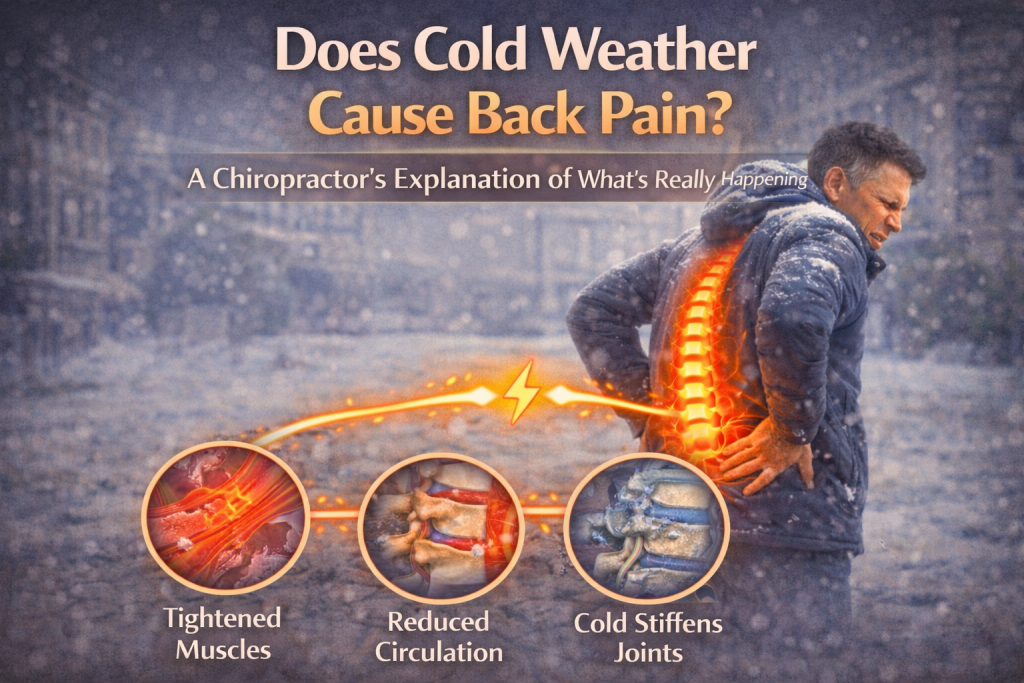
How Cold Weather Affects Muscles and Circulation
When the body is exposed to cold, blood vessels constrict to keep body temperature normal. This is a survival response, but it comes with a downside: reduced blood flow to muscles and connective tissue, especially in areas like the lower back.
Reduced circulation means muscles receive less oxygen and fewer nutrients. Muscles also lose flexibility in colder conditions, making them tighter and less responsive. In the lower back, this stiffness increases strain during everyday movements such as bending, standing, or getting out of bed.
Cold doesn’t create a new back problem, but it lowers the point at which muscle tension becomes painful.
Joint Sensitivity and Pressure Changes
Cold weather often goes along with changes in barometric pressure. While research is ongoing, chiropractors routinely find people with arthritis, disc degeneration, or past spinal injuries feel more discomfort during colder periods.
Lower pressure may allow tissues around joints to expand slightly, increasing sensitivity in painful areas. In the spine, this can make joints and surrounding structures more reactive, especially in the lumbar region.
Again, cold can aggravate, not cause pain.
Less Movement, More Stiffness
Cold weather also changes behavior. People move less, sit longer, and avoid outdoor activity. Unfortunately, the spine relies on movement to stay healthy. Reduced activity leads to joint stiffness, muscle tightening, and weaker core muscles.
Over time, this combination creates a perfect situation where back pain becomes more noticeable and recovery slows. Many winter flare-ups are driven as much by inactivity as by temperature itself.
Why Old Back Injuries Flare Up in the Cold
Tissue injured in the past behaves differently than healthy tissue. Scar tissue, chronically tight muscles, and areas with reduced circulation respond more strongly to cold-triggered muscle tightening.
That’s why people with a history of disc issues, muscle strains, or spinal procedures often notice seasonal symptoms. Cold weather reveals underlying mechanical weaknesses that are easier to manage when tissues stay warm and mobile.
A Simple At-Home Way to Counter Cold-Related Back Pain
Chiropractors find the most effective way to manage cold-related back pain is not medication—it’s restoring circulation, releasing tight muscles and adjusting the spine safely.
That’s why I created the Back Pain Eraser System for my patients. Using two targeted massage balls and a step-by-step guide book based on common low-back pain patterns. This one of a kind system allows people to gently warm tight muscles, improve blood flow, release tension and pain at home—either against a wall or on the floor.
Cold weather makes muscles tighten. Addressing that tightness routinely can help prevent stiffness from turning into prolonged pain.
When Cold Weather Is Not the Cause
It’s important to be accurate. Cold weather does not cause disc herniation, spinal instability, or nerve damage. Severe, progressive, or neurological symptoms should never be blamed on the weather alone.
If pain is persistent, worsening, or accompanied by numbness, weakness, or systemic symptoms, proper chiropractic evaluation is essential.
A Clinical Perspective
From a chiropractic standpoint, cold weather increases back pain by reducing circulation, increasing muscle stiffness, limiting movement, and increasing pain sensitivity. These effects matter most in people with pre-existing spinal or muscular problems.
That’s why strategies that address cold environments with—movement, warmth, circulation, and muscle release—are far more effective than simply resting and waiting for spring.
Conclusion: Does Cold Weather Cause Back Pain?
Cold weather does not directly cause back pain, but it can make back pain worse by highlighting weaknesses in muscle function, circulation, and movement. It tightens muscles, limits activity, and increases sensitivity in already compromised tissues.
Here is the takeaway: cold weather doesn’t create back problems—it reveals and worsens the ones already there. Managing all of the factors mentioned above routinely matters far more than the temperature itself.
If your back pain worsens every winter, the solution isn’t to fear the cold—it’s to address what the cold is uncovering by visiting your local chiropractor..