
Weight Loss
Can a Chiropractor Help With Weight Loss? An Evidence-Based Look
Written by Dr. James Krystosik · Published December 4, 2025 · Updated September 23, 2026
Functional Medicine Physician, Chiropractor, Author, Podcast Host · In practice since 1986
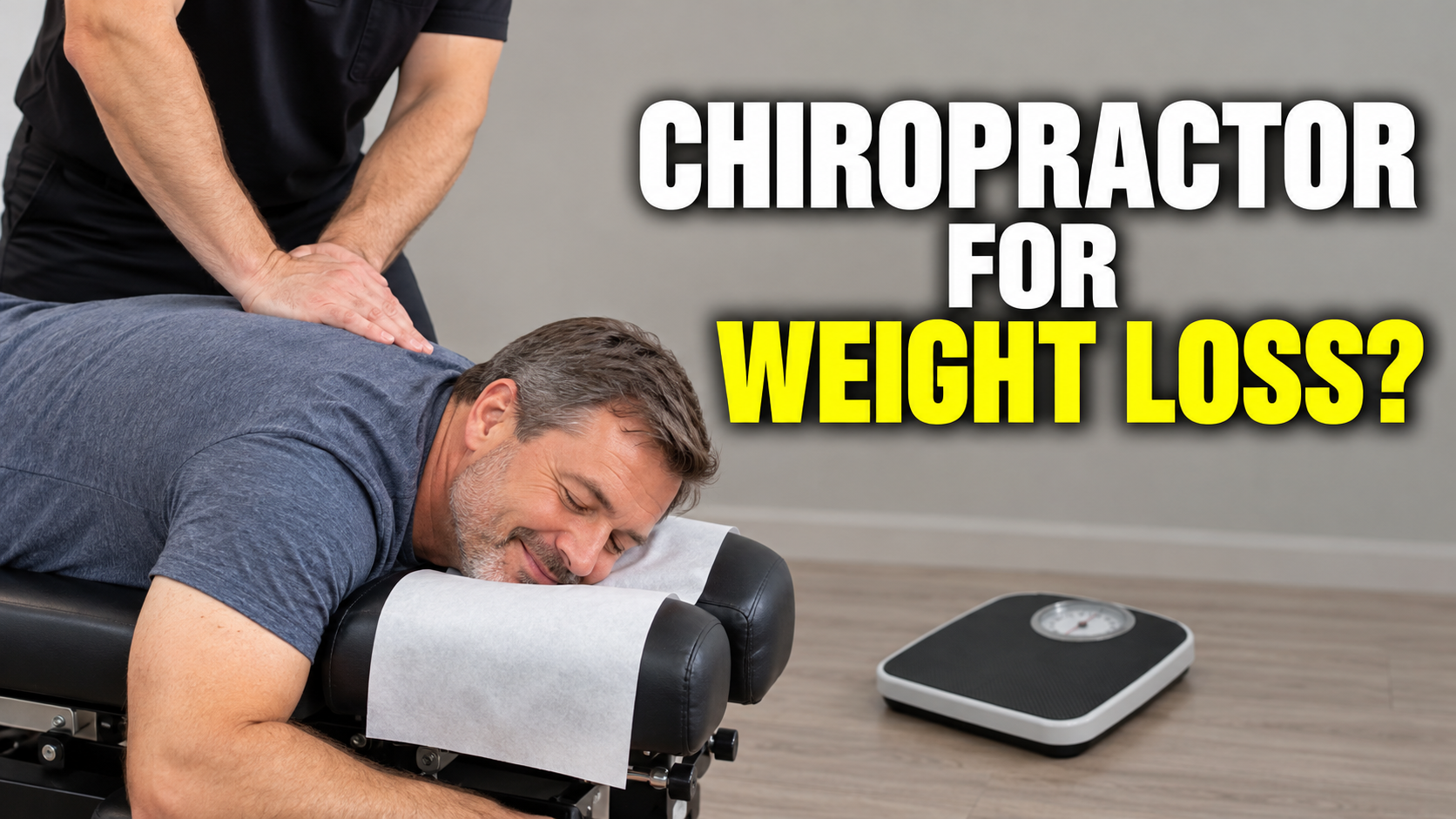
Dr. J’s quick answer: Chiropractic treatment does not directly cause fat loss or reset weight-control hormones. Its realistic role is indirect: when appropriate care reduces pain and improves movement, some patients find it easier to be active and follow a sustainable health plan.
Most people visit a chiropractor because pain or stiffness is making everyday movement difficult. Weight loss is a different goal, and I want to be direct about the distinction: an adjustment does not burn a meaningful number of calories, melt fat, correct thyroid disease, or replace nutrition and physical activity.
Where chiropractic care may fit is more practical. If back, hip, or neck pain keeps you from walking, strength training, sleeping comfortably, or preparing meals, appropriate musculoskeletal care may help remove one barrier to healthier behavior. That is support for a weight-management plan—not a weight-loss treatment by itself.
Join GUT RESTORATION COMMUNITY

What chiropractic care can realistically do
For selected back and neck problems, a plan that may include manual therapy, exercise, and education can help with pain or function. When a patient hurts less, ordinary movement may become easier. That can mean walking farther, returning to strength work, sleeping more comfortably, or simply spending less of the day sitting.
Those changes matter because regular activity supports health and weight maintenance. The connection is behavioral and functional: less pain may make healthy activity more achievable. It is not evidence that an adjustment directly changes fat metabolism.
What chiropractic care has not been shown to do
Current evidence does not support telling patients that spinal adjustments:
- directly burn body fat;
- correct insulin resistance, thyroid disease, or leptin resistance;
- “reset” cortisol or reproductive hormones;
- treat SIBO or improve nutrient absorption; or
- produce weight loss without changes in energy intake, activity, medication, or another relevant factor.
I also do not use the number on a scale as proof that a musculoskeletal treatment changed a patient’s metabolism. Body weight naturally fluctuates, and several changes often happen at the same time.
Pain, movement, and a sustainable plan
Pain can create a difficult cycle. Movement hurts, activity drops, sleep may suffer, and confidence declines. A good plan begins by identifying what movements are safe now—not by demanding an intense workout.
Depending on the diagnosis, I may discuss walking in short intervals, aquatic activity, a recumbent bike, or progressive resistance exercise. Chiropractic care may be one part of this plan when it is appropriate, but active rehabilitation and self-management are important. If treatment is not improving function, the plan should be reassessed.
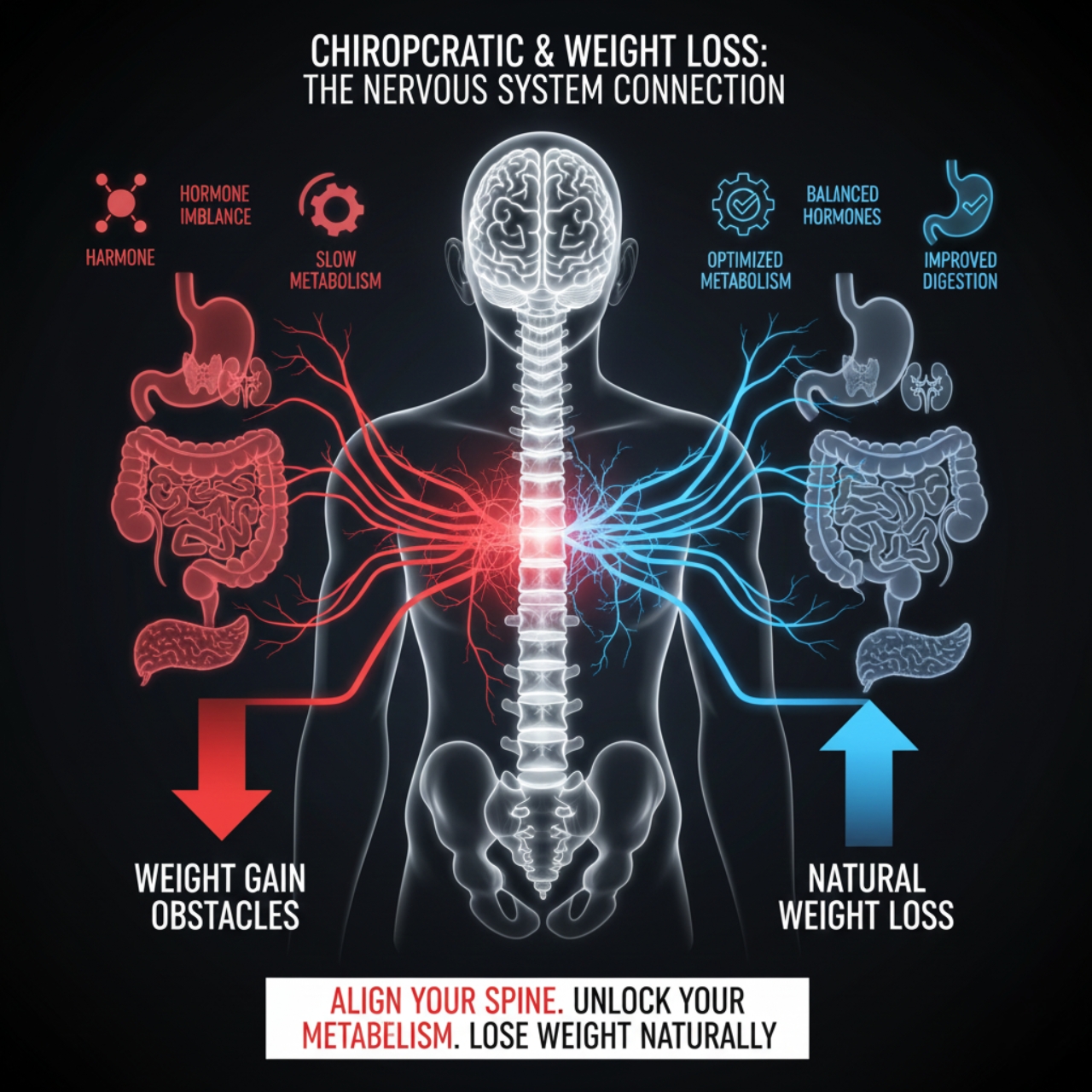
Look beyond the spine when weight is changing
Unexplained weight gain or difficulty losing weight is not automatically a “nerve interference” problem. Sleep apnea, menopause, thyroid disease, diabetes, depression, medications, alcohol intake, dietary pattern, and loss of muscle mass can all be relevant. Rapid or unexplained change deserves a medical review.
When I work with a patient who has both pain and a weight concern, I separate the questions:
- What is causing or maintaining the pain?
- What is limiting safe movement?
- Is a medical condition or medication affecting weight?
- What nutrition and activity changes are realistic?
- How will we measure progress beyond the scale?
The bottom line
A chiropractor may help support a weight-management plan when appropriate care improves pain, mobility, or confidence. That is a useful but limited role. Sustainable fat loss still depends on the larger picture, including nutrition, physical activity, sleep, medical conditions, medications, and ongoing support.
Dr. J’s evidence-based perspective
In my clinical work, I do not sell patients a single-food, single-device, or single-treatment solution. I look at the complete pattern: nutrition, movement, sleep, stress, medications, medical conditions, muscle mass, and what the patient can realistically sustain.
When to seek medical care
Seek individualized medical advice if weight changes are rapid or unexplained, or if you are pregnant, breastfeeding, living with diabetes, taking weight-affecting medication, or have a history of an eating disorder. Chest pain, fainting, or severe weakness needs urgent assessment.