
Back pain is one of the most common reasons people struggle with sleep. From lower back stiffness to chronic spinal discomfort, pain that worsens at night often leads people to look into getting a new mattress, pillow, or sleep position. In recent years, adjustable beds have become increasingly popular, especially for people seeking relief from back pain. This naturally raises an important question: are adjustable beds actually good for back pain, or are they simply a comfort upgrade?

To answer this properly, it’s important to understand how back pain interacts with sleep posture, spinal alignment, and pressure distributed to the low back—and where adjustable beds may offer some real benefits.
Why Sleep Position Matters for Back Pain?
The spine is designed to maintain a natural curve while standing, sitting, and sleeping. When the alignment is disrupted for hours at night, muscles and ligaments are under constant
tension, often leading to morning stiffness or worsening pain.
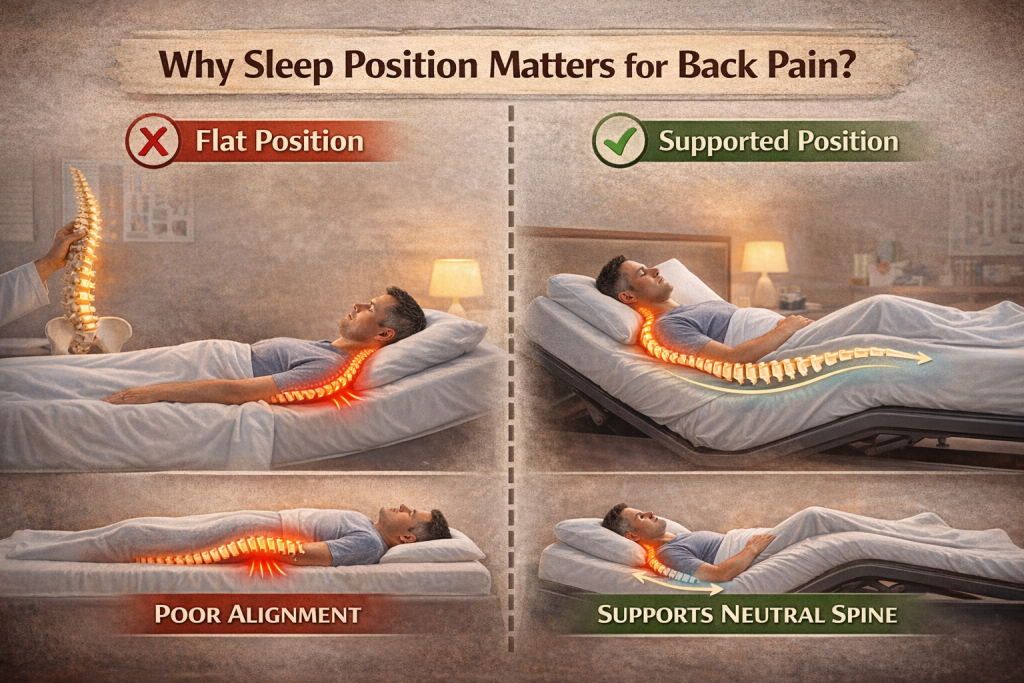
Many traditional flat mattresses force the body into positions that increase stress on the lower back, particularly for side sleepers and people with lumbar pain. Sleeping flat can also increase pressure on the hips, shoulders, and lower spine, especially if muscle imbalances or disc issues are present.
Sleep takes up to roughly one-third of the day, even small improvements in spinal positioning during rest can significantly influence back pain over time.
How Adjustable Beds Support the Spine?
Adjustable beds allow the head and foot sections of the mattress to be raised or lowered independently. This flexibility makes it possible to customize sleep posture in ways a flat bed cannot.
From a chiropractic viewpoint, adjustable beds can help back pain by:
- Reducing pressure on the lumbar spine
- Supporting a neutral spinal curve
- Decreasing muscle tension during sleep
One commonly recommended position is a slightly elevated upper body combined with raised knees. This position reduces the arch in the lower back and relaxes surrounding muscles, which can ease discomfort for people with chronic lumbar pain.
The Zero-Gravity Position and Back Pain Relief
Many adjustable beds include a “zero-gravity” setting, originally developed by NASA to reduce spinal pressure on astronauts. In this position, the head and legs are elevated so the body’s weight is evenly distributed.
Clinically, this posture:
- Reduces compression on spinal discs
- Improves circulation
- Decreases pressure on the lower back
For people with back pain, this position often feels immediately relieving because it takes stress off the lumbar spine and allows muscles to relax fully.
Conditions That May Benefit Most From Adjustable Beds
While adjustable beds are not a medical treatment, they can be particularly helpful for certain types of back pain. People with chronic lower back pain, disc-related discomfort, arthritis, or spinal stiffness often report improved comfort when sleep posture is adjustable.
They may also benefit individuals who:
- Experience pain that worsens when lying flat
- Have stiffness or pain upon waking
- Need positional changes during the night
That said, results vary. Back pain has many causes, and no single sleep solution works for everyone.
Adjustable Beds vs. Mattresses Alone
It’s important to clarify that an adjustable bed frame and a supportive mattress work together. An adjustable base cannot make up for a mattress that lacks proper support, and a good mattress alone may not solve posture-related pain if sleeping position remains suboptimal.
The most benefit typically occurs when:
- A medium-to-supportive mattress is paired with an adjustable base
- Sleep positions are customized to reduce spinal stress
- Adjustments are used consistently rather than occasionally
This combined approach allows the body to rest in a more neutral, pain-reducing position night after night.
Limitations and Considerations
While adjustable beds can improve comfort and reduce nighttime back pain for many people, they are not a cure-all. They do not correct structural spinal issues, heal injuries, or replace physical therapy, exercise, or chiropractic spinal manipulation..
Some people may also need time to experiment with positions to find what works best. Improper use—such as excessive elevation or unsupported mattress pairing—can reduce the benefits.
Consulting a chiropractor is especially important for individuals with severe or worsening back pain.
A Chiropractic Perspective on Back Pain and Sleep
Back pain is rarely caused by one factor alone. Whole food, plant based nutrition to reduce inflammation, sleep position, daily movement, muscle strength, posture, and stress all contribute. Adjustable beds can play a supportive role by improving nighttime spinal alignment and reducing mechanical stress, but long-term relief usually requires a comprehensive approach.
When combined with proper exercise, ergonomics, and chiropractic spinal adjustments, improving sleep posture can be a meaningful part of managing chronic back pain.
Conclusion: Are Adjustable Beds Good for Back Pain?
Adjustable beds can be very helpful for back pain, particularly by allowing customized sleep positions that support spinal alignment and reduce pressure on the lower back. Many people experience improved comfort, reduced stiffness, and better sleep quality when using an adjustable bed—especially when paired with a supportive mattress.
They are not a medical cure, but for individuals whose pain is influenced by sleep posture, adjustable beds can be a valuable tool in managing back pain more effectively.