
Alcohol is often treated as a minor detail in conversations about weight loss. Carbohydrates are shunned. Fats are debated. Exercise plans are recommended . But alcohol? It’s usually brushed aside—especially if it’s “just a glass of wine” or “only on weekends.”
That leads to an important question:
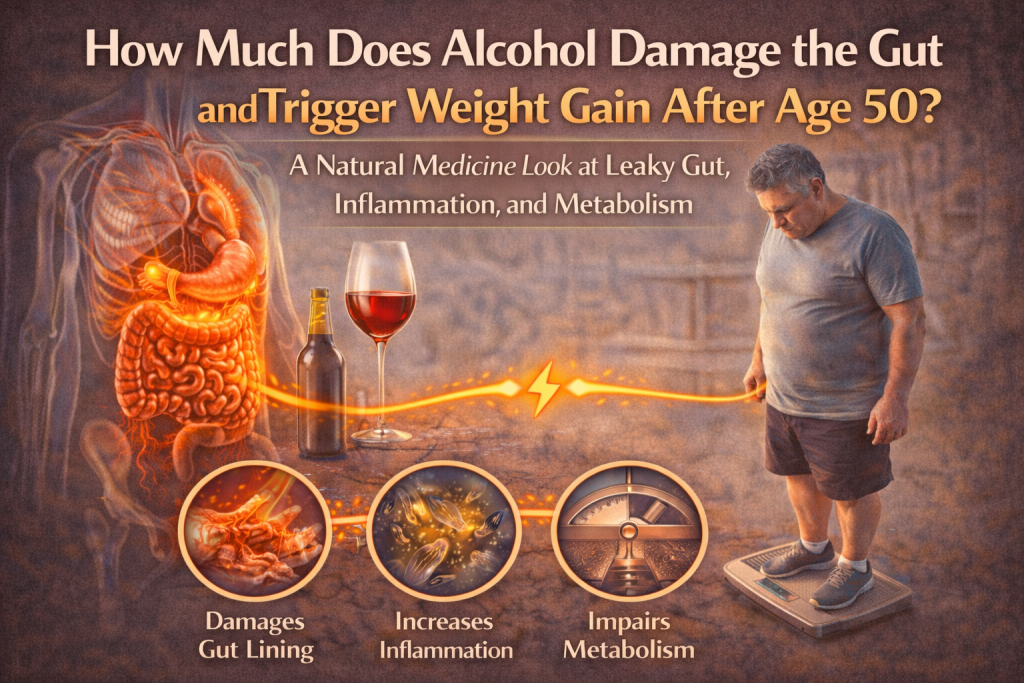
How much does alcohol damage the gut—and could that damage be contributing to weight gain, especially after age 50?
The answer is more important than most people realize. Not because of calories. Not because of willpower. But because millions of people over 50 have gut health problems with inflammation. Alcohol directly affects the delicate lining of your gut—and when the gut is inflamed, metabolism suffers.
The Gut Lining: Your Metabolic Gatekeeper
Inside your digestive tract is a thin but powerful barrier made up of tightly joined intestinal cells. This lining acts like a security guard. It allows nutrients from foods—to enter your bloodstream, while keeping toxins, bacterial fragments, and undigested food particles out.
When that barrier is intact, your body is healthy and in balance.
When it becomes irritated and damaged, toxins can enter into the bloodstream —what is known as “leaky gut”—consequently, inflammation increases. And inflammation is one of the most overlooked drivers of weight gain after 50.
Alcohol has been shown in research to:
- Increase intestinal permeability
- Damage the gut lining
- Increase harmful gut bacteria
- Increase inflammatory compounds in the bloodstream
Even moderate alcohol intake can temporarily increase gut permeability. In individuals over 50—with a compromised gut and the liver’s ability to remove toxins may already be reduced—inflammation can become widespread.
Alcohol as a Gut Irritant
When alcohol enters the digestive tract, it doesn’t behave like carbohydrates, fats, or protein. The body treats it as a toxin that must be neutralized quickly. But before the liver can process it, alcohol comes into direct contact with the intestinal lining.
This contact can:
- Irritate the lining of the gut
- Disrupt gut bacteria
- Increase absorption of toxins
- Promote low-grade inflammation throughout the entire body
Over time, repeated exposure may weaken the gut barrier. And when bacterial toxins pass into circulation, the immune system activates.
The result? Chronic inflammation.
And chronic inflammation shifts the body toward fat storage.
Leaky Gut and Weight Gain: What’s the Connection?
After age 50, hormonal changes already make fat loss more challenging. Insulin sensitivity declines. Muscle mass gradually decreases. Recovery slows.
Add gut inflammation to the picture, and weight gain is increased.
When inflammatory compounds circulate:
- Insulin signaling becomes less efficient
- Cortisol may rise
- Fat oxidation decreases
- The body becomes more prone to belly fat storage.
This is particularly noticeable around the midsection. Many people assume stubborn belly fat is simply “age.” But often, it’s inflammation. And alcohol can quietly contribute to that inflammatory load.
The Microbiome Factor
Your gut bacteria influence:
- Appetite regulation
- Blood sugar control
- Fat storage
- Immune balance
- Mood
Alcohol disrupts these body systems. Studies show it can reduce beneficial bacteria and encourage the growth of more inflammatory strains of bacteria. An imbalanced microbiome has been strongly associated with obesity and metabolic syndrome.
In other words, alcohol doesn’t just pause fat burning while it’s being metabolized—it may shift the internal environment in a way that promotes fat storage long-term.
This is not about a single drink. It’s about repeated exposure.
Alcohol, Sleep, and Hormones After 50
Sleep becomes more of a problem with age. Alcohol may help you fall asleep initially, but it disrupts deep restorative sleep later in the night.
Poor sleep alone:
- Increase hunger hormones
- Reduce insulin sensitivity
- Elevate cortisol
- Slows fat loss
Alcohol compounds these effects.
In addition, alcohol can interfere with growth hormone release during sleep—one of the hormones that supports muscle maintenance and fat metabolism.
After 50, preserving muscle mass is critical. Muscle is your metabolic engine. Anything that interferes with recovery and hormone balance makes fat loss harder.
How Much Alcohol Makes a Difference?
This is where common sense matters.Occasional, moderate alcohol intake does not automatically lead to weight gain. Many people can still maintain a healthy weight while drinking occasionally.
However, frequency often matters more than quantity.
Drinking small amounts several times per week keeps the gut repeatedly exposed to irritation and the liver repeatedly shifting into detox mode. Over time, this can create a cumulative inflammatory effect.
Clinically, alcohol is one of the most common hidden factors in slowing weight-loss after 50. You may have a clean diet. Exercise routinely. But fat loss slows.
Often, when alcohol is reduced—even temporarily—progress resumes. Not because calories were dramatically lowered. But because inflammation decreased and metabolic efficiency improved.
Alcohol Is Not the Enemy—But It Is a Stressor
From a natural medicine perspective, alcohol is not “forbidden.” But it is always a physiological stressor.
Your body can prioritize:
- Healing the gut
- Burning fat
- Balancing hormones
Or
- Clearing alcohol
It cannot fully optimize both at the same time.
Understanding this removes guilt and replaces it with awareness.
A Sustainable Approach After 50
If weight loss has stalled and alcohol is part of your routine, consider:
- Taking a 30-day break to see if your weight loss is activated.
- Reducing frequency rather than eliminating entirely
- Supporting gut health with high-fiber whole foods
- Emphasizing fermented foods and phytonutrient-rich vegetables
- Prioritizing sleep
Many people notice reduced bloating, improved energy, better digestion, and a gradual reduction in abdominal fat when gut irritation decreases.
Conclusion: How Much Does Alcohol Affect Gut Health and Weight After 50?
Alcohol affects weight loss more than most people realize—not simply because of calories, but because it can irritate the gut lining, increase inflammation, disrupt sleep, alter microbiome balance, and shift metabolic priority away from fat burning.
Occasional drinking may slow progress slightly.
Regular drinking may contribute to weight gain through inflammatory pathways.
The most accurate takeaway is this:
Alcohol doesn’t make weight loss impossible—but if gut health is compromised, it can make fat loss slower, more difficult, and less predictable.
When the gut health returns, weight loss follows.
To your health and longevity,
Dr. James D. Krystosik