

Back pain doesn’t affect the back alone. For many people, it affects the way they walk, stand, and move throughout the day. When pain begins to change posture or the gait, even simple activities like walking can place extra burdon on the spine. This often leads to the question: can a cane help with back pain, or is it only useful for leg injuries and balance issues?
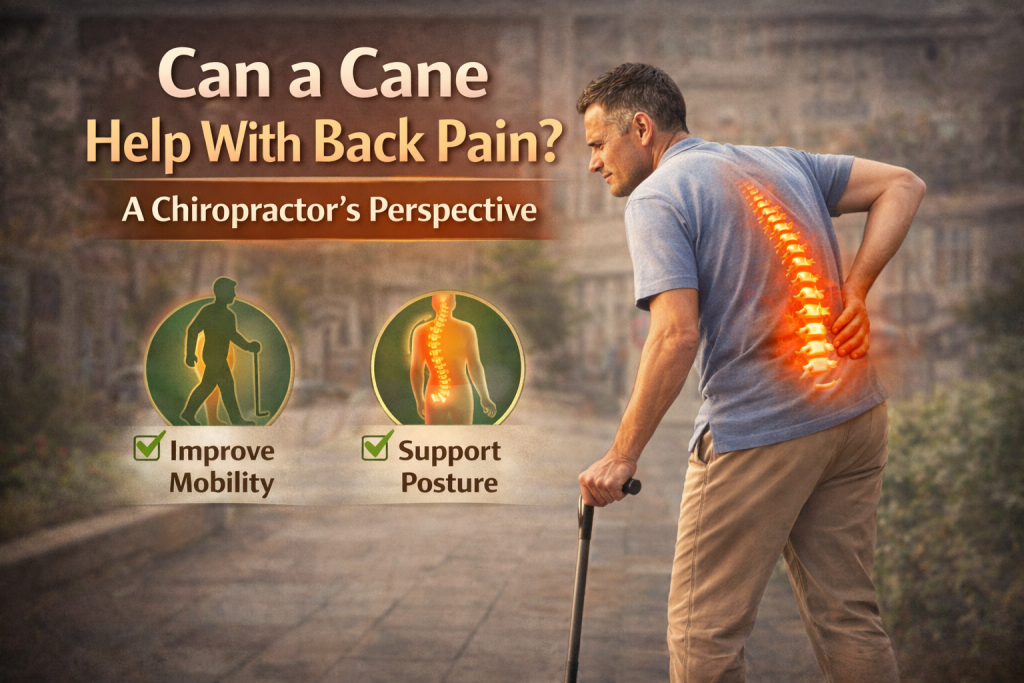
The answer is more complicated than a simple yes or no. A cane does not treat the underlying cause of back pain, but in the right situation it can reduce strain and pain, improve stability, and make daily movement more comfortable. To understand when a cane can help—and when it might not—we need to look at how back pain interacts with movement and posture.
How Back Pain Affects Walking and Posture?
Back pain often changes the way a person moves, without thinking. When the spine is painful or unstable, the body compensates by shifting weight unevenly, shortening the length of steps a person takes, or leaning to one side. Over time, these compensations can increase muscle tension, joint stress, and fatigue, maaking the pain worse rather than relieving it.
Lower back pain, in particular, is closely linked to how we walk and move. If one side of the body bears more load than the other, the lumbar spine takes on additional stress with every step. This is where a cane may offer benefit—not by healing the spine, but by reducing the load during put on the spine during movement.
How a Cane Can Reduce Back Pain Strain?
A cane works by evenly distributing the weight and improving balance. When used correctly, it transfers some of the load from the lower body and spine to the upper body through the arm. This can reduce the forces traveling through the hips, pelvis, and lower back during walking.
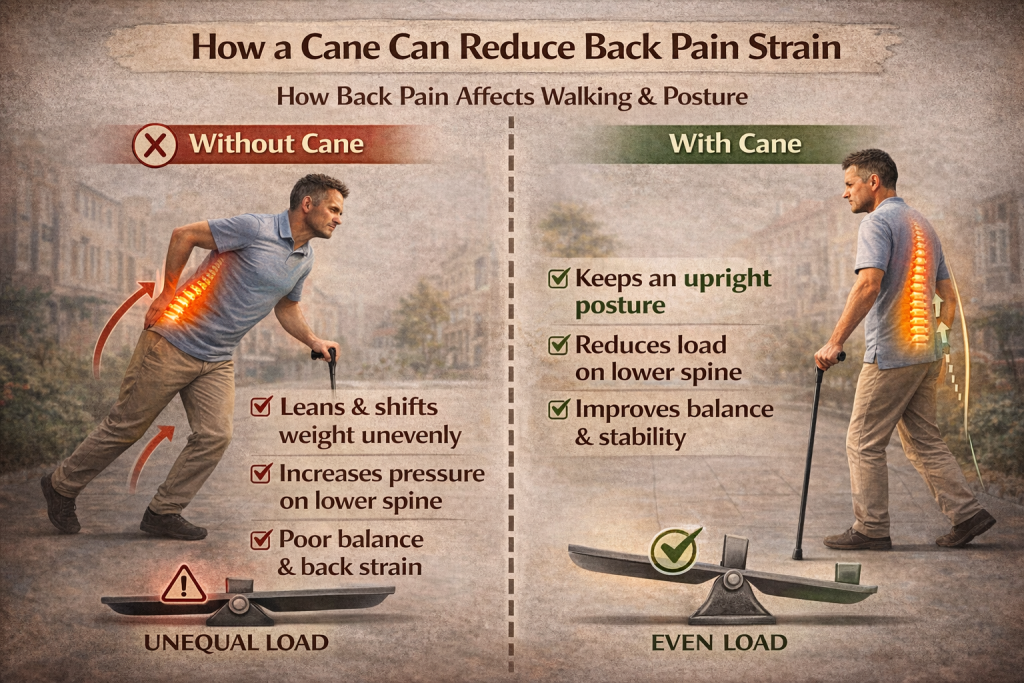
From a biomechanical standpoint, a cane can:
- Decrease pressure on the lower back during weight-bearing
- Improve balance and stability
- Encourage a more upright posture
- Reduce muscle tension
These effects are helpful for people whose back pain worsens with walking or standing for long periods.
When a Cane Is Most Likely to Help?
A cane is most useful when back pain is accompanied by unstable walking, imbalance, or pain that radiates into the hips or legs. For example, individuals with lumbar disc issues, spinal arthritis, sciatica, or muscle weakness may find that a cane reduces discomfort during movement.
It can also help people who are recovering from a flare-up of back pain, allowing them to walk while minimizing strain and pain. Maintaining movement—rather than avoiding it completely—is often important for recovery.
However, the benefits of the can depends heavily on it’s proper use.
Proper Cane Use Matters
Using a cane incorrectly can reduce its effectiveness or even contribute to new problems. From a chiropractic standpoint, a cane should typically be held in the hand opposite the side of pain or weakness. This positioning helps counterbalance the body and reduces stress on the side of the spine where the pain exists.
Cane height is also important. When standing upright with the cane tip on the ground, the handle should align roughly with the crease of the wrist. This allows the elbow to bend slightly, providing support without forcing the shoulder upward.
When used properly, a cane supports natural movement rather than limiting it.
When a Cane May Not Be the Right Solution?
A cane is not good for every type of back pain. If pain is caused by muscle tension, poor posture, misalignments of the spine, or prolonged sitting, addressing your work station , strengthening, and movement patterns may be more effective than using an assistive device.
There is also a risk of becoming overly dependent on a cane if it is used long-term without getting to the root underlying cause of the pain. Long term reliance on a cane can lead to muscle weakness, particularly in the core and lower body, which are essential for spinal support.
For this reason, chiropractors only recommend a cane as a temporary or a first aid, rather than a permanent solution.
A Chiropractic Perspective on Back Pain Management
Back pain is rarely solved by a single solution. While a cane can reduce mechanical stress during walking, long-term improvement usually requires a a holistic, chiropractic approach. Chiropractic spinal adjustments, soft tissue work, physical therapy, core strengthening, whole food nutrition and supplementation, posture correction, drug-free pain management strategies, and addressing contributing factors such as weight, footwear, and activity level all play important roles.
In the right circumstance, a cane can be a helpful tool that supports mobility while other treatments address the root cause of pain.
Conclusion: Can a Cane Help With Back Pain?
Yes, a cane can help with back pain in specific situations—particularly when pain affects balance, walking, or weight distribution. By improving stability and reducing strain on the spine, a cane may make movement more comfortable and help prevent further aggravation and pain.
However, a cane does not treat the underlying cause of back pain and should not replace a thorough chiropractic evaluation, treatments and rehabilitation. When used correctly and as part of a broader care plan, it can be a valuable support tool rather than a crutch.
The key is understanding its role: a cane supports movement—it does not cure back pain.