
Bloating is one of the most common—and frustrating—digestive complaints, especially after age 50. Many people describe it the same way: your stomach feels tight, swollen, uncomfortable. Some days it comes and goes. Other days it lingers no matter what you eat.
You try cutting foods. You try eating less. Sometimes you skip meals altogether.
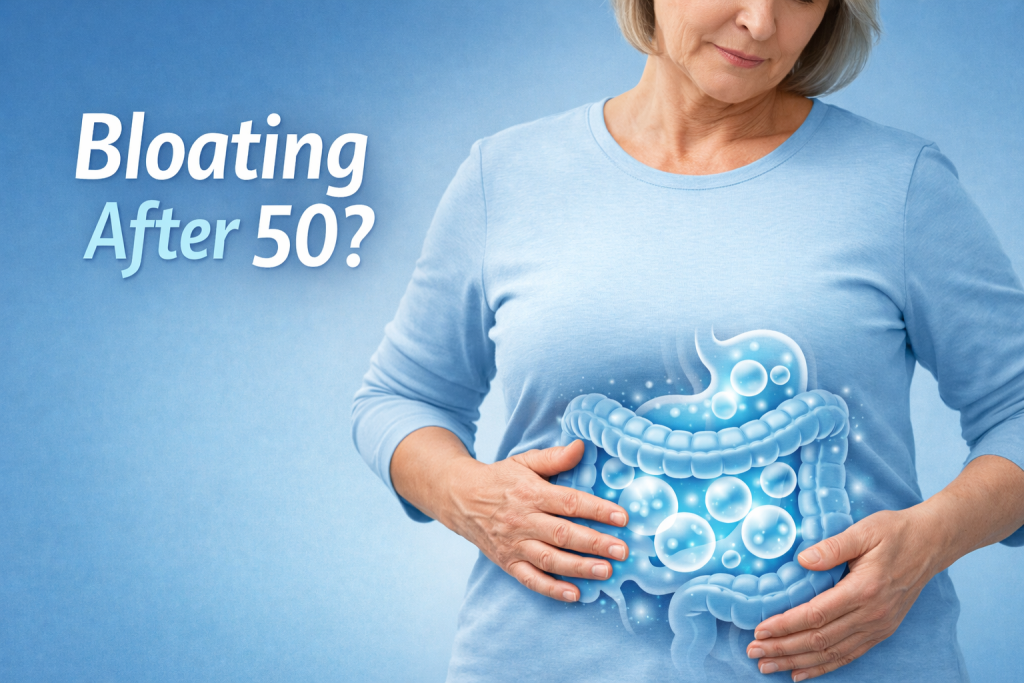
And yet the bloating continues.
This leads to the question I hear often with my patients.
“Why am I always bloated—and why did this start after 50?”
The answer is rarely one single cause. It’s usually a combination of changes that occur gradually over time.
Digestion Changes More Than You Think After 50
Most people assume bloating is caused by “bad food.”
That is often the case. But in many cases, the issue is not the food—it’s how the body is processing the food.
After age 50, stomach acid production often declines. Digestive enzymes may become less effective. The microbiome—the beneficial bacteria in your gut—can shift after decades of antibiotics, processed foods, medications, and stress.
When food is not broken down properly, it sits longer in the digestive tract. Bacteria begin fermenting that undigested food, producing gas.
That gas is what you feel as bloating.
Low Stomach Acid: The Hidden Cause
One of the most overlooked causes of bloating is low stomach acid.
This surprises many people, especially those who have been told they have “too much acid.” In reality, low stomach acid is far more common after 50.
Stomach acid is essential for breaking down protein and sterilizing food before it moves into the intestines. When acid is low, food digestion becomes incomplete.
This leads to:
- Gas production
- Bloating after meals
- Feeling full quickly
- Reflux-like symptoms
Ironically, many people take acid-blocking medications that make this problem worse over time.
The Microbiome Shift
Your gut bacteria play a central role in digestion. When the microbiome is balanced, beneficial bacteria help break down food efficiently and produce compounds that support gut health.
But after 50, microbial diversity often declines.
Unfriendly bacteria may begin to dominate, especially if the diet has been low in fiber or high in processed foods. These bacteria produce more gas during fermentation, leading to persistent bloating.
This is not just a digestive issue. It’s an imbalance in the gut bacteria.
Slower Gut Motility
Another factor is how quickly food moves through the digestive tract.
With age, gut motility often slows down. Food stays in the intestines longer, giving bacteria more time to ferment it.
This increases gas production and contributes to that heavy, distended feeling.
Constipation often goes hand in hand with this process, making bloating even worse.
Stress and the Gut
Stress plays a larger role than most people realize.
When the body is in a stressed state, digestion slows down. Blood flow is redirected away from the gut. Enzyme production decreases. The microbiome shifts.
Even mild, chronic stress—something very common after 50—can significantly affect digestion.
This is why some people feel more bloated during stressful periods, even if their diet hasn’t changed.
Food Sensitivities Become More Noticeable
Foods that were once tolerated easily may now cause symptoms.
This is not always because the food itself is harmful. It’s often because the digestive system has become damaged. It results in what is known as “leaky gut syndrome.”
Consequently, even healthy foods now trigger inflammation and symptoms that can arise anywhere in the body.
Common triggers include:
- Dairy
- Gluten-containing grains
- Highly processed foods
- Sugary foods
These delayed food allergies are common and often undetected. Consequently, symptoms are treated and not the underlying cause.
But again, the root issue is often digestion—not just the food.
The Gut-Weight Connection
Many people notice that bloating and weight gain seem to go together.
This is not a coincidence.
An imbalanced gut can affect appetite hormones, blood sugar regulation, and fat storage signals. It can also create inflammation, which contributes to fluid retention and abdominal distention.
Bloating is often a signal that the gut is not functioning efficiently—and that affects metabolism as well.
Restoring Balance Instead of Eliminating Everything
The common reaction to bloating is restriction. People start cutting foods one by one, hoping to find the culprit.
A simple blood test can identify these hidden food allergies.
Although many people can reverse their chronic symptoms by eliminating hidden food allergies, you can always try to incorporate the following procedures first.
It comes from restoring the digestive system.
Supporting stomach acid.
Feeding beneficial bacteria.
Improving gut motility.
Reducing inflammation.
Managing stress.
When the gut begins to function properly again, many foods become easier to tolerate.
A Clinical Perspective
After working with thousands of patients, one pattern becomes clear:
Bloating after 50 is not random.
It is a signal.
A signal that digestion is not as efficient as it once was. A signal that the microbiome needs support. A signal that the gut has been under stress for years and is now asking for attention.
When the gut improves, bloating improves.
And often, so do energy, clarity, and overall health.
Conclusion: Why You’re Always Bloated After 50
Persistent bloating after 50 is rarely caused by one single factor. It is usually the result of reduced stomach acid, microbial imbalance, slower digestion, and chronic stress and or hidden food allergies.
The most important takeaway is this:
Bloating is not just a symptom to suppress—it is a message from the gut.
When you address the underlying causes and restore balance, the digestive system begins to work the way it was designed to.
And when that happens, bloating is no longer a daily struggle—it becomes the exception.