
SIBO
SIBO Die-Off Symptoms—or a Treatment Side Effect?
Written by Dr. James Krystosik · Published May 6, 2025 · Updated September 23, 2026
Functional Medicine Physician, Chiropractor, Author, Podcast Host · In practice since 1986

Dr. J’s quick answer: Feeling worse during treatment is not reliable proof of “die-off” or successful therapy. New or severe symptoms may reflect side effects, dehydration, an excessive dose, or the wrong diagnosis, so I reassess rather than telling a patient to push through.
People sometimes feel worse after starting treatment for Small Intestinal Bacterial Overgrowth (SIBO). Online, almost any new symptom may be called “die-off.” I do not want that label to become a reason to ignore a medication reaction, supplement interaction, dehydration, worsening disease, or an incorrect diagnosis.
Fatigue, bloating, headache, nausea, brain fog, diarrhea, and flu-like feelings are nonspecific. They do not confirm that microbes are dying or that treatment is working.
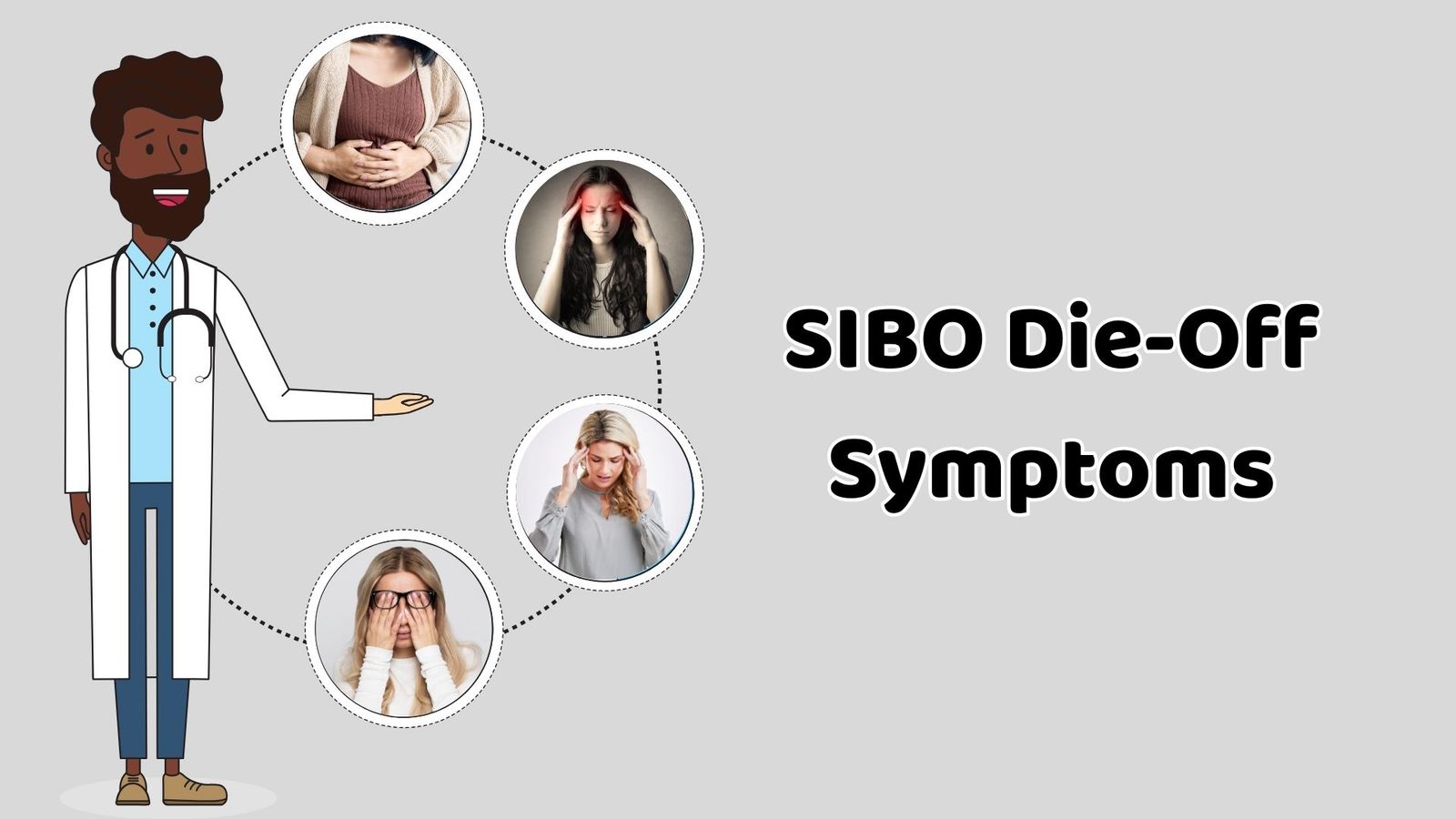
Why Do SIBO Die-Off Symptoms Sometimes Get Worse?
The Jarisch–Herxheimer reaction is a recognized inflammatory response associated mainly with treatment of certain spirochetal infections. It should not be automatically applied to every symptom that occurs during SIBO treatment.
When symptoms worsen after a new antimicrobial, diet, or supplement, I consider more common explanations first:
- a medication or supplement side effect;
- a dose that is not tolerated;
- dehydration or inadequate calorie intake;
- constipation or diarrhea getting worse;
- an interaction with another medication;
- the original condition progressing; or
- a diagnosis that needs to be reconsidered.
What Exactly Are SIBO Die-Off Symptoms?
Symptoms that deserve a call to the treating clinician include persistent vomiting or diarrhea, a new rash, severe headache, fever, fainting, confusion, worsening abdominal pain, or symptoms of dehydration. Trouble breathing, facial swelling, severe weakness, black or bloody stool, or rapidly worsening symptoms require urgent care.
Do not assume that fever, chills, rash, or neurologic symptoms are “toxins leaving the body.”
When Does SIBO Die-Off Begin?
There is no validated timetable showing that SIBO “die-off” begins within 24 to 72 hours or lasts a predictable number of days. The timing of a symptom may offer a clue—for example, nausea beginning soon after a new supplement—but it does not prove the biological mechanism.
My safer response when symptoms worsen
- Pause and document: Record the product, dose, timing, food intake, bowel changes, and symptoms.
- Contact the treating clinician: Ask whether the treatment should be stopped, reduced, or changed. Do not alter a prescription without guidance unless emergency instructions say otherwise.
- Protect hydration and nutrition: Replace fluids as appropriate and avoid turning a difficult treatment into a prolonged fast.
- Avoid unproven “binders”: Activated charcoal can interfere with medications and nutrients; bentonite clay and chlorella are not routine SIBO rescue treatments.
- Reassess the diagnosis: If the pattern does not make sense or symptoms keep worsening, return to the original clinical question.
Want more? Join GUT RESTORATION COMMUNITY and get my free book “Carbs from Heaven, Carbs from Hell.”
A Final Word of Encouragement
Feeling worse is not a required part of healing. A tolerable, evidence-informed plan is more responsible than asking a patient to “push through” severe symptoms. Natural products can have pharmacologic effects, side effects, and interactions, so I apply the same safety standard to supplements that I apply to prescriptions.
So, are you ready to say goodbye to illness and hello to wellness?
Join GUT RESTORATION COMMUNITY for FREE. Get access to The Supernatural Morning Routine, my “Carbs from Heaven, Carbs from Hell” book, free courses, podcast episodes, natural health resources, and other like-minded people.
Join GUT RESTORATION COMMUNITY
Dr. J’s evidence-based perspective
In my clinical work, I treat symptoms as clues—not proof of a diagnosis. I listen to the full history, look for common and serious alternatives, and use testing when it can change the plan. I also avoid turning a short-term symptom diet into a permanent list of forbidden foods.
When to seek medical care
Contact a clinician promptly for blood in the stool, black stool, persistent vomiting, fever, dehydration, anemia, progressive trouble swallowing, severe abdominal pain, or unintentional weight loss. These are not symptoms to manage with diet or supplements alone.