
SIBO
Does SIBO Cause Bad Breath? Reasons And Solutions
Written by Dr. James Krystosik · Published April 29, 2025 · Updated September 23, 2026
Functional Medicine Physician, Chiropractor, Author, Podcast Host · In practice since 1986
Dr. J’s quick answer: Most persistent bad breath begins with oral or dental causes, so I do not jump straight to SIBO. Digestive symptoms may justify further evaluation, but dental care and common medical causes should be addressed first.
There can be many reasons behind bad breath, and there are many side effects and symptoms of SIBO. But the question comes when someone relates both of them.
Does SIBO cause bad breath? The answer is yes, SIBO can cause bad breath. Even bad breath is one of the most common symptoms of SIBO. If you’ve tried mouthwash, tongue scraping, and avoided garlic like the plague—yet still suffer from chronic bad breath—then it’s time to stop blaming your mouth and start looking south…to your gut. More specifically, a condition known as SIBO, or Small Intestinal Bacterial Overgrowth, may be the hidden culprit.
Let’s dive into this frequently overlooked gut health problem and uncover how SIBO can sour more than just your breath—it may be sabotaging your entire health.
What Is SIBO? And How Is It Related to Bad Breath?
Imagine your small intestine as a clean, fast-flowing river. It’s designed to absorb nutrients efficiently while staying relatively free of bacteria. Now imagine that river clogged with debris—stagnant, sluggish, and overloaded with bacteria that should be residing in the large intestine instead. That’s SIBO in a nutshell.
SIBO involves an abnormal concentration or pattern of microorganisms in the small intestine. Fermentation can produce hydrogen or methane and contribute to bloating or altered bowel habits. Evidence linking SIBO directly to bad breath is limited, so I do not diagnose it from odor alone.
Bad Breath: More Than a Breath Mint Can Handle
Dental disease, tongue coating, dry mouth, tobacco, sinus disease, and some foods are much more common explanations for bad breath. When good oral care does not solve it, I recommend a dental evaluation before assuming the odor starts in the gut.
That’s when I step in and ask my patients a deeper question: Why?
The answer may lie in the gas byproducts produced during fermentation by SIBO-related bacteria. Hydrogen sulfide and methane are two common gases generated by these microbes. Not only can they cause bloating and irregular bowel movements, but hydrogen sulfide smells like rotten eggs, and that odor doesn’t stay trapped in your gut.
It can rise up through the esophagus and out through the lungs, giving your breath a foul, sulfuric odor that not even the strongest breath mint can mask. In fact, many people with chronic halitosis don’t have a dental problem at all—they have a gut health problem.
Does SIBO Cause Bad Breath?
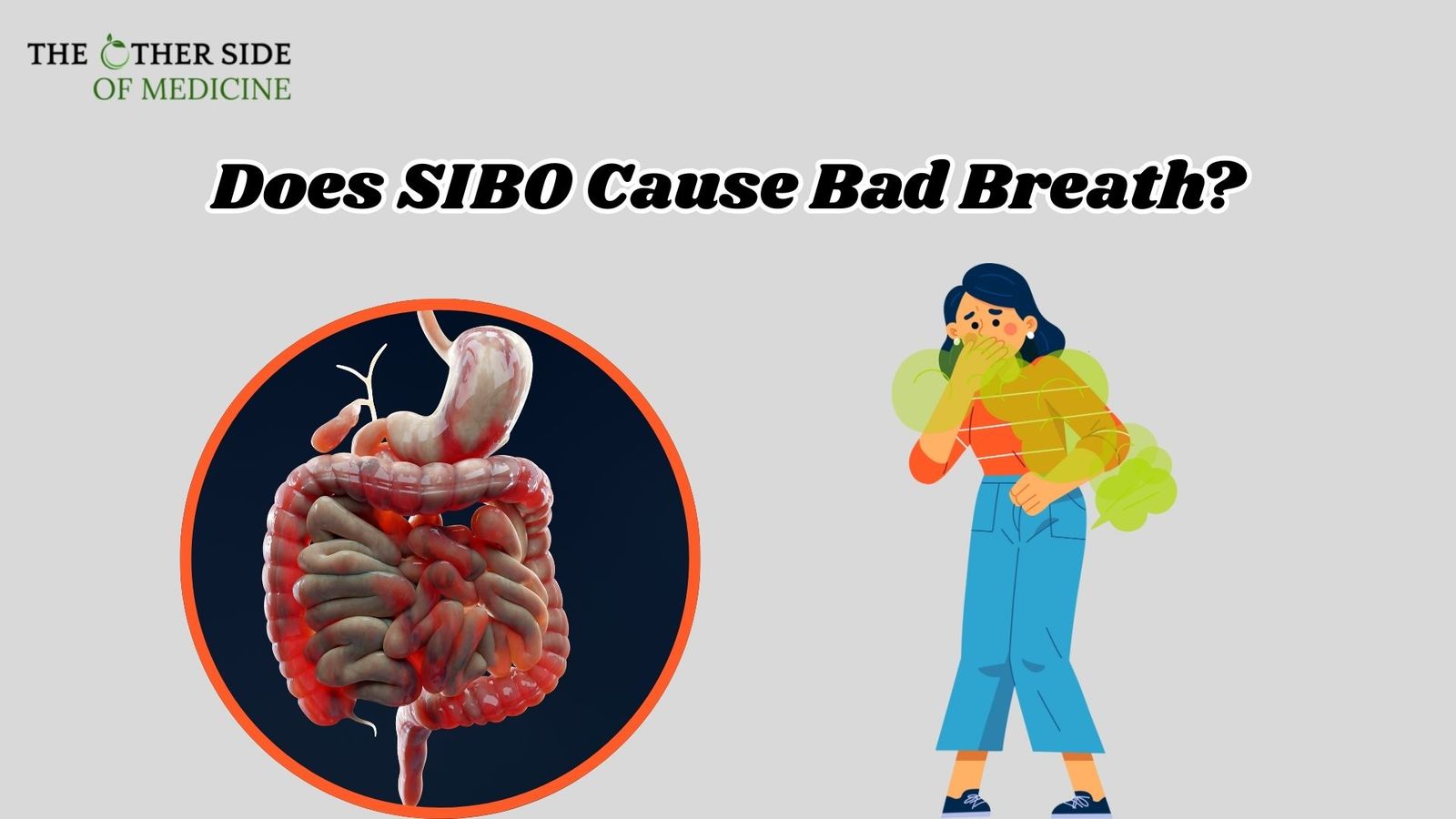
Digestive health matters, but bad breath does not prove that the intestinal lining, immune system, brain, or “detox” pathways are impaired.
When bacteria are overgrown in the wrong place, they create a disruption in health throughout the body. Think of it as your body trying to haul out biochemical garbage, and your breath is just one of the ways your body tries to “take out the garbage.”
Unfortunately, the standard approach to chronic bad breath is symptomatic treatment at best. Chew some gum. Spray a mouth freshener. Rinse with antiseptic mouthwash.
It’s like spraying air freshener over a garbage can—it might help for a moment, but the stink always comes back.
Why the Cause Can Be Hard to Identify
Here’s the problem: Most doctors aren’t trained to connect digestive dysfunction with symptoms like bad breath. They’re great at identifying what you have—halitosis—but they rarely ask why you have it.
That’s why so many people bounce from dentist to doctor to gastroenterologist and still get no answers. And when they finally hear the word “SIBO,” it’s usually after years of frustration.
But you don’t have to stay in the dark. Let me explain the root cause and the steps to take to fix it, naturally.
Natural Solutions for SIBO and Fresh Breath
If SIBO is behind your bad breath, here’s the good news: It’s treatable, and often reversible, using natural, evidence-based medicine.
Starve the Bacteria
Begin by removing the fuel source—refined carbohydrates and sugars (aka “carbs from hell”). These feed the overgrown bacteria. Instead, focus on “carbs from heaven”: fiber-rich vegetables, low-sugar fruits, and properly prepared legumes (as tolerated).
Identify reproducible food triggers
Food intolerance may worsen digestive symptoms, but a commercial IgG blood panel does not reliably diagnose a hidden food allergy. I use a food-and-symptom history and, when appropriate, a short elimination followed by reintroduction. Suspected true food allergy should be evaluated by a qualified allergy professional.
Use Herbal Antimicrobials
Nature has powerful tools. I prescribe herbal formulas that contain oregano, berberine, garlic (yes, ironically), and others to correct bacterial overgrowth without the side effects of harsh antibiotics.
Repair the Gut
I recommend soothing herbs like aloe vera, deglycyrrhizinated licorice (DGL), and glutamine to heal the gut lining and reduce inflammation.
Rebalance with Probiotics
After clearing the overgrowth, it’s crucial to include fermented foods like yogurt (I prefer dairy-free and sugar-free), refrigerated sauerkraut, pickled beets, kimchi, kombucha, and others to restore microbial harmony.
I also prescribe Saccharomyces boulardii, a transient probiotic that kills harmful microorganisms, boosts the immune system, and helps repair the lining of the gut.
Support Digestion
Many SIBO sufferers have low stomach acid, a key barrier against bacterial overgrowth. If needed I recommend digestive enzymes to help optimize digestion and keep invaders out.
Don’t Just Mask the Symptom—Fix the Cause
If you’re struggling with persistent bad breath despite good dental hygiene, don’t accept it as a mystery. Listen to your gut—literally. It may be crying out for help in the form of SIBO.
A good plan treats the cause that is actually found. That may involve dental care, dry-mouth management, evaluation of sinus or reflux symptoms, or treatment of a confirmed digestive condition. I do not promise that treating SIBO will resolve every case of bad breath.
So the next time someone tells you your breath smells like a biology experiment gone wrong, remember: it might not be your mouth at all. It might be time for a gut check.
Goodbye SIBO…hello fresh breath!
Dr. J’s evidence-based perspective
In my clinical work, I treat symptoms as clues—not proof of a diagnosis. I listen to the full history, look for common and serious alternatives, and use testing when it can change the plan. I also avoid turning a short-term symptom diet into a permanent list of forbidden foods.
When to seek medical care
Contact a clinician promptly for blood in the stool, black stool, persistent vomiting, fever, dehydration, anemia, progressive trouble swallowing, severe abdominal pain, or unintentional weight loss. These are not symptoms to manage with diet or supplements alone.