
Massage is widely viewed as one of the safest and most effective ways to relieve back pain. It’s commonly recommended for muscle tension, stress relief, and post-exercise recovery. Yet some people walk away from a massage feeling worse than before—more sore, stiffer, or even in more pain. This raises an important question: can massage actually make back pain worse?
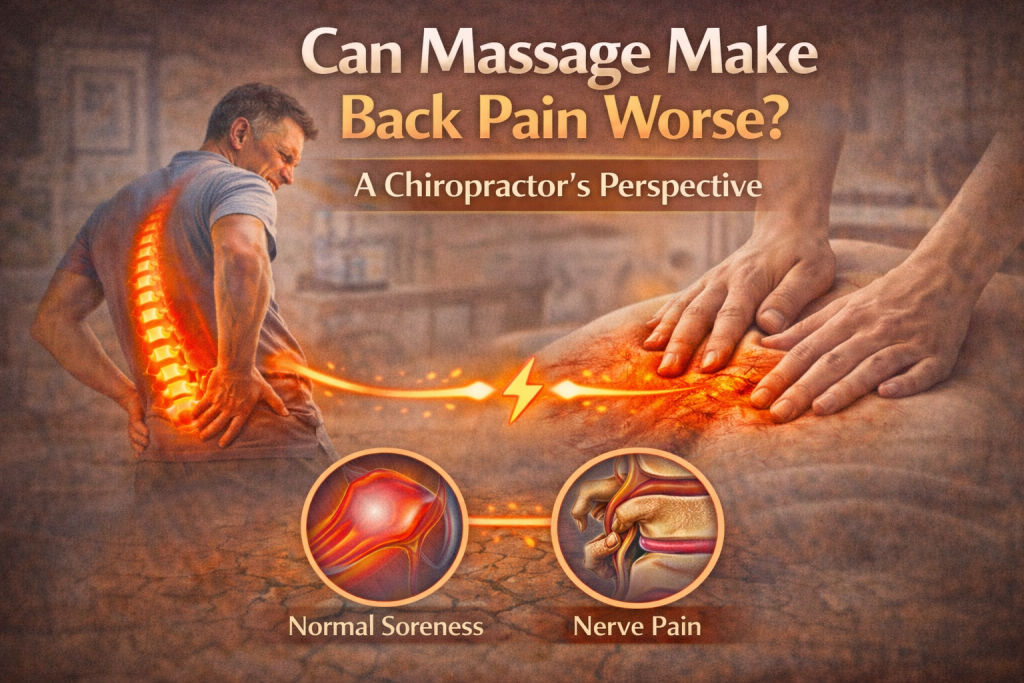
The short answer is yes—in certain situations, massage can temporarily or even persistently worsen back pain. This doesn’t mean massage is harmful overall, but it does mean that the type of pain, the technique used, and the timing all matter.
To understand why this happens, we need to look at how massage interacts with muscles, nerves, and tissues that are inflamed.
How Massage Affects the Body
Massage works by applying pressure to soft tissues such as muscles, fascia, and connective tissue. This pressure increases blood flow, reduces muscle guarding, and stimulates the nervous system. For many people, these effects reduce pain and improve mobility.
Massage is a physical therapy applied to the body. It physically manipulates tissue. When the underlying problem is not muscular—or when tissue is already irritated—this stimulation can aggravate symptoms rather than relieve them.
According to Harvard Health’s overview of massage therapy, massage is most effective for muscle-based pain and stress, but it may not be appropriate for all types of back pain.
When Massage Can Make Back Pain Worse
Massage is most likely to worsen back pain when the pain is not caused by muscle tension. For example, back pain related to disc herniation, nerve compression, spinal instability, or acute inflammation may not respond well to deep pressure.
Aggressive techniques such as deep tissue massage can irritate already inflamed muscles or compress sensitive nerves. This can lead to increased soreness, sharp pain, or radiating symptoms into the hips or legs. In these cases, massage doesn’t address the root cause and may make the pain worse and prolong the pain.
Another common situation involves acute injuries. Massaging tissue too soon after a strain or injury can increase inflammation and delay healing. In early stages, rest and gentle movement are often more appropriate than manual pressure.
The Difference Between “Normal Soreness” and Problematic Pain
It’s normal to experience mild soreness after a massage, especially if tight muscles were worked deeply. This soreness usually feels similar to post-exercise discomfort and resolves within 24 to 48 hours.
Pain that is triggered by massage feels different. It may be sharper, more intense, or longer-lasting. It may interfere with movement or sleep, or cause symptoms such as tingling, numbness, or shooting pain. These signs suggest that the massage may have irritated nerves or inflamed tissue rather than relaxed muscle.
The Cleveland Clinic’s guidance on massage therapy emphasizes if pain gets worse after massage, and goes beyond mild soreness it should be a clue that a reevaluation of the use of massage is indicated.
Technique and Pressure Matter
Not all massage is the same. Light, relaxing massage affects the nervous system differently than deep tissue or trigger-point work. When pressure exceeds what the tissue can tolerate, the body may respond in a negative way by increasing muscle tension and pain.
This is especially important for people with chronic back pain. Chronic pain changes how the nervous system processes sensation, making tissues more sensitive and reactive. In these cases, gentler techniques often work better than aggressive ones.
Discussing the individuals response to massage with your chiropractor is important. Pain during massage is not a sign that treatment is “working.” Prolonged discomfort or pain signals the technique may need to be adjusted or eliminated.
Underlying Conditions That Massage Cannot Fix
Massage does not correct structural spinal issues. Conditions such as spinal stenosis, severe disc degeneration, spinal misalignments, fractures, infections, or inflammatory spinal diseases require further chiropractor or specialists evaluation and very specific treatment procedures.
Using massage alone for these conditions can be disruptive and, in some cases, worsen symptoms. The Mayo Clinic’s overview of back pain causes highlights the importance of identifying the underlying source of pain before choosing treatment
When Massage Is Most Helpful for Back Pain
Massage tends to be most beneficial when back pain is related to muscle tension, stress, poor posture, or overuse. In these cases, improving circulation and reducing muscle guarding can significantly reduce discomfort and or pain.
Massage is also often helpful as part of a holistic treatment plan that includes chiropractic spinal adjustments, movement, physical therapy, work station setup and adequate nutrition and supplementation Used wisely, massage can support recovery rather than hinder it.
A Holistic Medical Perspective
From a medical standpoint, massage is neither universally good nor universally bad for back pain. Its effect depends on timing, technique, pressure, and diagnosis. When massage is applied to the right tissues, in the right way, at the right time, it can be highly beneficial. When those factors are ignored or not in concert with the massage, symptoms can worsen.
Listening to the body’s response—and adjusting accordingly—is key.
Conclusion: Can Massage Make Back Pain Worse?
Yes, massage can make back pain worse in certain situations, particularly when pain is caused by inflammation, nerve involvement, or structural spinal issues, or when pressure is too aggressive. Mild post-massage soreness is normal, but increased or prolonged pain is a sign that massage may not be wise to continue—or needs modification.
The most accurate takeaway is this: massage should reduce pain, not test your tolerance for it. When back pain worsens after massage, it’s a signal to get a comprehensive chiropractic examination, rather than pushing through any pain or discomfort.
When used wisely and in the right circumstances, massage remains a valuable tool—but it is not a one-size-fits-all solution for back pain.